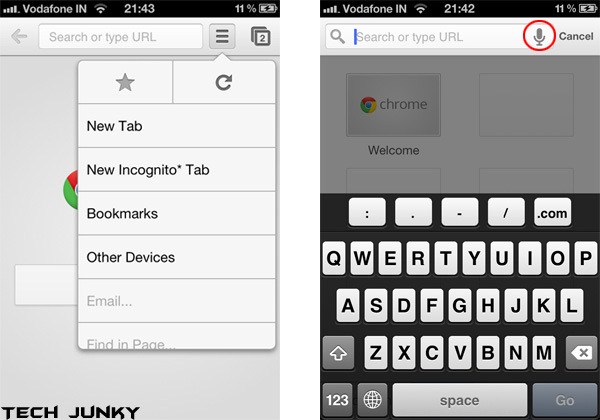
Yes you read it right – Google Chrome is now available for the iPhone and the iPad. The app was announced on the second day of the Google I/O annual conference and is the latest addition to Google’s iOS app basket. The release of Google Chrome for the iPhone and iPad comes a month after Yahoo released …
Continue reading Google Chrome for iPhone and iPad
Visualised: The rise of the iPhone
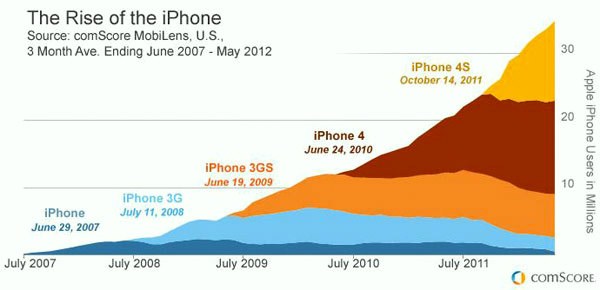
Today counts as an important day in the history of the iPhone: it’s the 5th anniversary of the original iPhone’s launch. 5 years ago, the very same day, Apple gave the world a phone that brought a revolution in the mobile market. Since then Apple has released a new iPhone every year, in total giving …
Continue reading Visualised: The rise of the iPhone
How to use your @FaceBook.com email account

Do you know that you have an @facebook.com email account? Sounds cool, right? It’s been there for a long time now and if you don’t know about it then it’s time you check out the FaceBook email facility. It’s been a while since FaceBook provided all it’s users with an @facebook.com email account. Though most …
Continue reading How to use your @FaceBook.com email account
BBM for Android and iOS ?
Amazon.com Widgets Lately there have been a lot of rumours about RIM porting the BlackBerry Messenger to other platforms like Android and iOS. Leaked screenshots have been all over the web showing a beta version of the BBM for Android app. The screens actually show a BBM for Android version 0.8.87 running SitSLIP debugger 1.3.45 …
Continue reading BBM for Android and iOS ?
Play Counter Strike online
Counter Strike is one of the most popular LAN games of all time. If you call yourself a Gamer then I’m sure you would have played Counter Strike over LAN atleast once. Though setting up CS over LAN is pretty simple, playing Counter Strike online seems difficult or impossible at first. If you wish to …
Continue reading Play Counter Strike online
Ten years after Windows malware, do you feel any safer?
Amazon.com Widgets Following an outbreak of Windows-related malware, Microsoft took Bill Gates’ requests in 2002 to make safety a main concern. Bill Gates was depressed seeing the incidents of breakouts and he had completely had it seeing how many reports and incidences had come to him. Similarly, the customers were also gloomy seeing the presence …
Continue reading Ten years after Windows malware, do you feel any safer?
UberSocial : The best Twitter app for BlackBerry
Twitter is one of the most trending social networking sites. With more and more celebs joining Twitter and more and more people following them, the rate at which Twitter is growing is insane If you’re an active Twitter user, then it’s next to impossible that you do not have a Twitter application installed on your …
Continue reading UberSocial : The best Twitter app for BlackBerry
Apple WWDC 2012: What all was unveiled
The recently concluded Apple World Wide Developer Conference (WWDC) showcased a lot of new stuff Apple has in store for us. There’s a new version of iOS, a refreshed MacBook lineup, improvements to Siri and a new Map service. Here’s a summary of what all was unveiled at the WWDC 2012: New Macbook Pro and …
Continue reading Apple WWDC 2012: What all was unveiled
The new MacBook Pro has the world’s highest-resolution notebook display
Amazon.com Widgets Apple just announced the next generation MacBook Pro at the ongoing Apple Worldwide Developers Conference. The latest MacBook Pro has been dubbed as having the ‘World’s highest-resolution notebook display’. The latest MacBook Pro comes equipped with a beautiful 220 ppi, 2880 X 1800 Retina display. It means it offers 3 million more pixels …
Continue reading The new MacBook Pro has the world’s highest-resolution notebook display
iOS 6 and iPhone 5 Coming in September
Apple is expected to release iOS 6 in September and the iPhone 5 shortly after, according to one industry analyst. The new version of Apple’s mobile operating system will be unveiled today at this year’s Worldwide Developers Conference (WWDC) at the Moscone Center in San Francisco. Some of the features for the new OS have …
Continue reading iOS 6 and iPhone 5 Coming in September